




All Trademarks and Registered Trademarks are the property of their respective Owners.
2005 – 2024 Darwin & Associates IT, All rights Reserved

InfoSec, or information security, is a set of tools and practices that you can use to protect your digital and analog information. InfoSec covers a range of IT domains, including infrastructure and network security, auditing, and testing. It uses tools like authentication and permissions to restrict unauthorized users from accessing private information. These measures help you prevent harms related to information theft, modification, or loss.

Although both security strategies, cyber security and information security cover different objectives and scopes with some overlap. Information security is a broader category of protections, covering cryptography, mobile computing, and social media. It is related to information assurance, used to protect information from non-

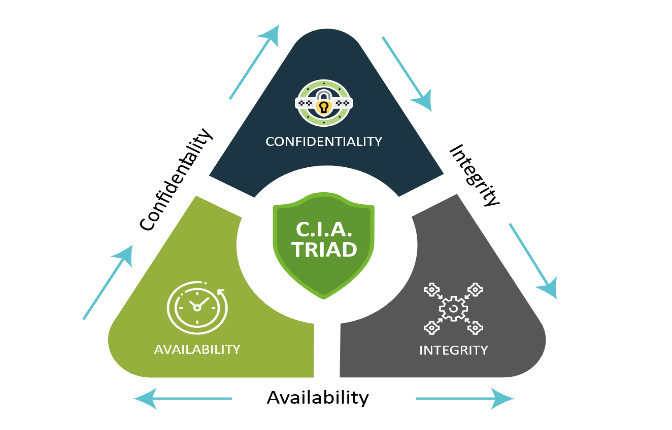
The CIA triad consists of three core principles – confidentiality, integrity, and availability (CIA). Together, these principles serve as the foundation that guides information security policies. Here is a brief overview of each principle:
- Confidentiality: Information must only be available to authorized parties.
- Integrity: Information must remain consistent, trustworthy, and accurate.
- Availability: Information must remain accessible to authorized parties, even during failures (with minimal or no disruption).
Ideally, information security policies should seamlessly integrate all three principles of the CIA triad. Together, the three principles should guide organizations while assessing new technologies and scenarios.
When considering information security, there are many subtypes that you should know. These subtypes cover specific types of information, tools used to protect information and domains where information needs protection.

Application security strategies protect applications and application programming interfaces (APIs). You can use these strategies to prevent, detect and correct bugs or other vulnerabilities in your applications. If not secured, application and API vulnerabilities can provide a gateway to your broader systems, putting your information at risk.
Much of application security is based on specialized tools for application shielding, scanning and testing. These tools can help you identify vulnerabilities in applications and surrounding components. Once found, you can correct these vulnerabilities before applications are released or vulnerabilities are exploited. Application security applies to both applications you are using and those you may be developing since both need to be secured.

Infrastructure security strategies protect infrastructure components, including networks, servers, client devices, mobile devices, and data centers. The growing connectivity between these, and other infrastructure components, puts information at risk without proper precautions.
This risk is because connectivity extends vulnerabilities across your systems. If one part of your infrastructure fails or is compromised, all dependent components are also affected. Due to this, an important goal of infrastructure security is to minimize dependencies and isolate components while still allowing intercommunications.

Cloud security provides similar protections to application and infrastructure security but is focused on cloud or cloud-
Another aspect of cloud security is a collaboration with your cloud provider or third-

Cryptography uses a practice called encryption to secure information by obscuring the contents. When information is encrypted, it is only accessible to users who have the correct encryption key. If users do not have this key, the information is unintelligible. Security teams can use encryption to protect information confidentiality and integrity throughout its life, including in storage and during transfer. However, once a user decrypts the data, it is vulnerable to theft, exposure, or modification.
To encrypt information, security teams use tools such as encryption algorithms or technologies like blockchain. Encryption algorithms, like the advanced encryption standard (AES), are more common since there is more support for these tools and less overhead for use.

Endpoint security helps protect end-
Endpoints connecting to corporate networks become a security vulnerability that can potentially allow malicious actors to breach the network. An endpoint is essentially a potential entry point that cybercriminals can and often exploit through various techniques, like malicious software (malware) installed on an endpoint device to obtain control of a system or exfiltrate data.
An endpoint security solution examines processes, files, and network traffic on each endpoint for indicators of malicious activity. Once the tool detects a threat, it notifies the relevant users and can perform automated responses.
For example, an endpoint detection and response (EDR) tool can automatically respond to the threat using predetermined rules. Endpoint security solutions can employ additional strategies to protect endpoints, such as data encryption in transit and at rest, web content filtering, and application control.

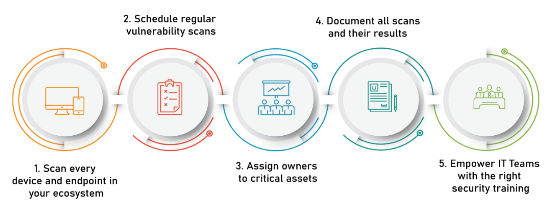
Vulnerability management is a practice meant to reduce inherent risks in an application or system. The idea behind this practice is to discover and patch vulnerabilities before issues are exposed or exploited. The fewer vulnerabilities a component or system has, the more secure your information and resources are.
Vulnerability management practices rely on testing, auditing, and scanning to detect issues. These processes are often automated to ensure that components are evaluated to a specific standard and to ensure vulnerabilities are uncovered as quickly as possible.

In your daily operations, many risks can affect your system and information security. Some common risks to be aware of are included below.

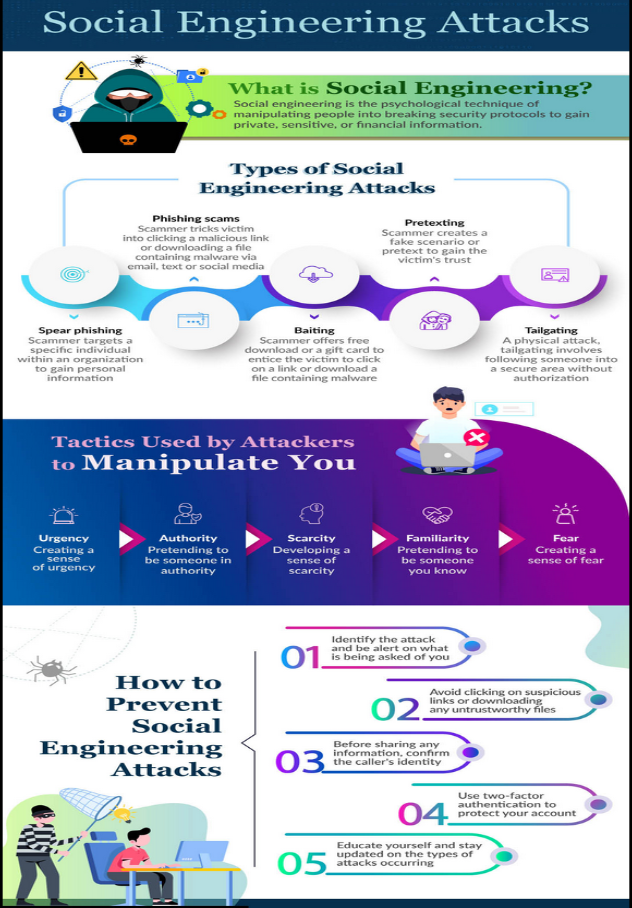
Social engineering involves using psychology to trick users into providing information or access to attackers. Phishing is one common type of social engineering, usually done through email. In phishing attacks, attackers pretend to be trustworthy or legitimate sources requesting information or warning users about a need to take action. For example, emails may ask users to confirm personal details or log in to their accounts via an included (malicious) link. If users comply, attackers can gain access to credentials or other sensitive information.

Advanced persistent threats are threats in which individuals or groups gain access to your systems and remain for an extended period. Attackers carry out these attacks to collect sensitive information over time or as the groundwork for future attacks. APT attacks are performed by organized groups that may be paid by competing nation-

Insider threats are vulnerabilities created by individuals within your organization. These threats may be accidental or intentional, and involve attackers abusing “legitimate” privileges to access systems or information. In the case of accidental threats, employees may unintentionally share or expose information, download malware, or have their credentials stolen. With intentional threats, insiders intentionally damage, leak, or steal information for personal or professional gain.

Crypto jacking, also called crypto mining, is when attackers abuse your system resources to mine cryptocurrency. Attackers typically accomplish this by tricking users into downloading malware or when users open files with malicious scripts included. Some attacks are also performed locally when users visit sites that include mining scripts.

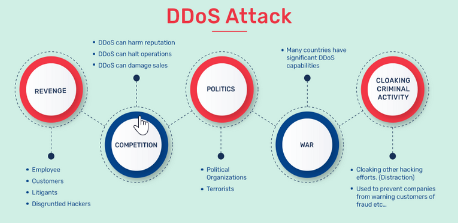
DDoS attacks occur when attackers overload servers or resources with requests. Attackers can perform these attacks manually or through botnets, networks of compromised devices used to distribute request sources. The purpose of a DDoS attack is to prevent users from accessing services or to distract security teams while other attacks occur.

Ransomware attacks use malware to encrypt your data and hold it for ransom. Typically, attackers demand information, that some action be taken, or payment from an organization in exchange for decrypting data. Depending on the type of ransomware used, you may not be able to recover data that is encrypted. In these cases, you can only restore data by replacing infected systems with clean backups.

MitM attacks occur when communications are sent over insecure channels. During these attacks, attackers intercept requests and responses to read the contents, manipulate the data, or redirect users.
There are multiple types of MitM attacks, such as :
- Session hijacking: in which attackers substitute their own IP for legitimate users to use their session and credentials to gain system access.
- IP spoofing: in which attackers imitate trusted sources to send malicious information to a system or request information back.
- Eavesdropping attacks: in which attackers collect information passed in communications between legitimate users and your systems.

Creating an effective information security strategy requires adopting a variety of tools and technologies.
Most strategies adopt some combination of the following technologies.

Firewalls are a layer of protection that you can apply to networks or applications. These tools enable you to filter traffic and report traffic data to monitoring and detection systems. Firewalls often use established lists of approved or unapproved traffic and policies determining the rate or volume of traffic allowed.

SIEM solutions enable you to ingest and correlate information from across your systems. This aggregation of data enables teams to detect threats more effectively, more effectively manage alerts, and provide better context for investigations. SIEM solutions are also useful for logging events that occur in a system or reporting on events and performance. You can then use this information to prove compliance or to optimize configurations.

DLP strategies incorporate tools and practices that protect data from loss or modification. This includes categorizing data, backing up data, and monitoring how data is shared across and outside an organization. For example, you can use DLP solutions to scan outgoing emails to determine if sensitive information is being inappropriately shared.

IDS solutions are tools for monitoring incoming traffic and detecting threats. These tools evaluate traffic and alert on any instances that appear suspicious or malicious.

IPS security solutions are similar to IDS solutions and the two are often used together. These solutions respond to traffic that is identified as suspicious or malicious, blocking requests or ending user sessions. You can use IPS solutions to manage your network traffic according to defined security policies.

UBA solutions gather information on user activities and correlate those behaviors into a baseline. Solutions then use this baseline as a comparison against new behaviors to identify inconsistencies. The solution then flags these inconsistencies as potential threats. For example, you can use UBA solutions to monitor user activities and identify if a user begins exporting large amounts of data, indicating an insider threat.

Blockchain cybersecurity is a technology that relies on immutable transactional events. In blockchain technologies, distributed networks of users verify the authenticity of transactions and ensure that integrity is maintained. While these technologies are not yet widely used, some companies are beginning to incorporate blockchain into more solutions.

EDR cybersecurity solutions enable you to monitor endpoint activity, identify suspicious activity, and automatically respond to threats. These solutions are intended to improve the visibility of endpoint devices and can be used to prevent threats from entering your networks or information from leaving. EDR solutions rely on continuous endpoint data collection, detection engines, and event logging.

CSPM is a set of practices and technologies you can use to evaluate your cloud resources’ security. These technologies enable you to scan configurations, compare protections to benchmarks, and ensure that security policies are applied uniformly. Often, CSPM solutions provide recommendations or guidelines for remediation that you can use to improve your security posture.

Bring your own device (BYOD) is an approach that permits employees to use their personally-
BYOD can improve the user experience, allowing employees to work using familiar devices from any location. It enables employees to use their devices to work remotely from home or while traveling. However, BYOD often leads to shadow IT, as IT staff have poor visibility (if at all) into these endpoints and cannot properly implement and maintain security measures.
Organizations can protect against BYOD threats by employing application virtualization and endpoint security solutions to extend visibility and gain comprehensive security and management controls.
MITRE ATT&CK is a security framework created by the MITRE Corporation. It defines all component stages of the cyberattack lifecycle and provides information about techniques, behaviors, and tools involved in each stage of various attacks. The framework offers a standard vocabulary and practical applications to help security professionals discuss and collaborate on combating cyber threats. Security teams use this information to inform and improve the organization’s threat detection and response (TDR).

CVE stands for Common Vulnerabilities and Exposures. CVE is a glossary that tracks and catalogs vulnerabilities in consumer software and hardware. It is maintained by the MITRE Corporation with funding from the US Division of Homeland Security. It was created as a baseline of communication and common terminology for the security and tech industries.
The CVE glossary analyzes vulnerabilities and then uses the Common Vulnerability Scoring System (CVSS) to evaluate their level of severity. A CVE score is often used to prioritize vulnerabilities for remediation and response.

Log management is a crucial aspect of Information security. Logs are records of events that occur within an operating system or software, and they can provide valuable information about potential security incidents. By effectively managing and analyzing these logs, organizations can identify patterns or anomalies that might indicate a security breach.
Moreover, log management helps with regulatory compliance, as many regulations require companies to maintain detailed logs of what occurs within their systems. Therefore, having a robust log management strategy is not just about enhancing security but also about staying compliant with legal and regulatory requirements.

System hardening is the practice of reducing vulnerabilities in systems, applications, and infrastructure to minimize security risks. By eliminating potential attack vectors, organizations can reduce the attack surface. A basic system hardening practice involves removing redundant and unnecessary programs, ports, accounts functions, applications, permissions, and access. However, organizations should harden security according to their unique requirements. Common types of system hardening include:
- Application security
- Network hardening
- Server hardening
- Database hardening
- Operating system hardening

Compromised accounts enable threat actors to gain unauthorized access to digital assets. Organizations can prevent this threat by requiring strong authentication for all users.
Here are several options:
- Strong passwords: threat actors employ various technologies that attempt to guess passwords or use common default passwords. Organizations can enforce strong passwords policies to prevent threat actors from using insecure passwords to compromise accounts.
- Multi-
factor authentication (MFA): this security mechanism requires users to provide information (a PIN or biometric, for example) in addition to their username and password. MFA prevents threat actors from compromising accounts even if the actor knows the username and password.
Organizations should implement MFA for all users with privileged access to networks and systems, including administrators and security professionals.

Encryption is the process of scrambling information to render it meaningless. Organizations often use encryption to protect information against unauthorized usage. It helps maintain the confidentiality of data at rest or in transit.
Here are the main functions of encryption:
- Encoding: Encryption involves encoding a message to maintain its confidentiality.
- Verification: The encryption process uses authentication to verify the origin of a message.
- Integrity: Encryption processes maintain data integrity by proving the contents of a message did not change post-
transmission. - Nonrepudiation: Encryption prevents the data sender from denying they sent an encrypted message.

Automation facilitates rapid detection of critical vulnerabilities for systems in production and during the development process. Tools like static application security testing (SAST) and dynamic application security testing (DAST) check for vulnerabilities in proprietary code during development. Organizations can also use open source scanners to automatically inventory open source components and look for known vulnerabilities and potential weaknesses.

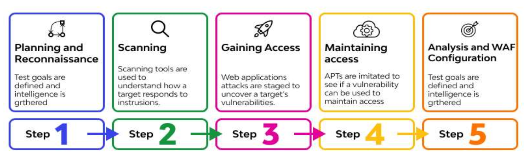
Penetration testing (pentesting) involves simulating a cyberattack to look for vulnerabilities and security weaknesses. It is an authorized form of ethical hacking performed to improve the organization’s security posture. There are various ways in which a pentest can take place. For example, external pentesting involves attempting to breach the network without prior knowledge of the architecture, while internal pentesting involves inspecting the source code to find vulnerabilities.
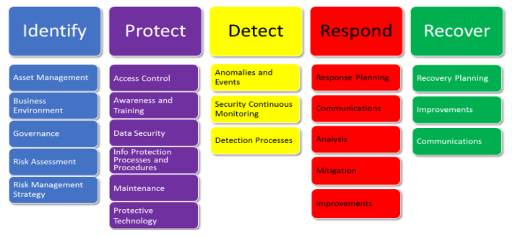
Cybersecurity frameworks provide a structured set of guidelines on how to handle and manage potential threats to your digital and non-


Threat actors often use social engineering techniques to trick employees into divulging sensitive and financial information, gain access to the organization, deploy malware, and launch other attacks. Awareness training helps inform employees in proper security practices and organizational policies, and secure coding training helps developers shift security to the left. Ideally, training should be a regular activity integrated seamlessly into the organization’s security culture.

- With any ransomware infection, nuke the infected machine from orbit and re-
image from bare metal - Get Secure Email Gateway and Web Gateways that cover URL filtering and make sure they are tuned correctly
- Make sure your endpoints are patched religiously, OS and 3rd Party Apps. Test the Flexera Personal Software Inspector on your workstation
- Make sure your endpoints and web gateway have next-
gen, frequently updated (a few hours or shorter) security layers, but don’t rely on them - Identify users that handle sensitive information and enforce multi-
factor authentication for them - Review your internal security policies and procedures, specifically related to financial transactions to prevent CEO fraud
- Check your firewall configuration and make sure no criminal network traffic is allowed out to C&C servers
- Leverage new-
school security awareness training, which includes frequent social engineering tests using multiple channels, not just email - You need to have weapons-
grade backups in place - Work on your security budget to show it is increasingly based on measurable risk reduction, and try to eliminate overspending on point-
solutions targeted at one threat- or- another

Social media accounts are powerful tools in the wrong hands. We’ve recently seen hackers take over the Twitter accounts of media outlets and large corporations, using them for anything from basic spam to drawing attention to global issues. Your own accounts might seem too small to tempt scammers, but even with just a few followers your information is a valuable commodity. Read on for tips to stay safe on social networks.

Do not be too personal
Social engineering is where attackers use whatever information they can glean from your public profiles – date of birth, education, interests – to try to get into your accounts on all sorts of services. Just imagine how easily someone can find out the name of your first pet or school from your Facebook profile, then think about how many services use them as security questions. Keep as much of your profile private as you can, and think twice before posting absolutely every aspect of your life.

Lock Your Phone
It’s not only faceless scammers on the Internet. Your phone can end up in the hands of a stranger, giving access to your social accounts (and more). It’s not just rogue updates: once they’re in they can obtain your email address, target your friends using your profile as bait, and even change your password. To make it as difficult as possible for an intruder, you should always enable the passcode lock on your phone, and set it to time out at no more than a few minutes.

Use the Block Button
When a spammer follows you and sends you links, don’t just ignore it. For the sake of others who are less well informed than you, always report the account as spam. The social networking service will monitor it and, if enough people take the same action, remove the account. It won’t stop spammers coming back with new accounts but it at least hinders their efforts.

Use Unique Passwords for Each Social Network
It’s a pain, but it is also absolutely essential that you don’t use the same password for Twitter as you do for, say, Facebook, Instagram and other social tools. Using a single password makes it easy for hackers, as gaining access to one means gaining access to all – and imagine how painful it will be when you find you’re locked out of your entire online life. When you use one password for multiple services, you’re only as safe as the least secure service you use.

Watch Your Mailbox
How can these social account hacks happen? By direct messages to you. Yes, using the same approach phishers have used for years it tends to be a rogue link in a message or email, perhaps sent to look like it’s from a colleague or friend, that exposes that all-

Common criteria is not an encryption standard but a set of international guidelines for verifying that product security claims hold up under testing. Originally, encryption was outside the scope of CC but is increasingly being included in the security standards defined for the project.
CC guidelines were created to provide vendor-

Data is valuable regardless of whether it is being transferred between users or sitting on a server and must be protected at all times. How that protection is accomplished depends on the state of the data.

Data is considered in-

Data is considered at rest when it resides on a storage device and is not actively being used or transferred. Data at rest is often less vulnerable than when in-
Encrypting data at rest reduces opportunities for data theft created by lost or stolen devices, inadvertent password sharing, or accidental permission granting by increasing the time it takes to access information and providing the time needed to discover data loss, ransomware attacks, remotely erased data, or changed credentials.


- Computer Network
- Data Recovery Services
- IT Business and Services
- IT Support Services
- On Site Support
- Remote Desktop Assistance
- Cloud Computing
- Information Security
Cloud Computing Value Proposition
- IT management simplification
- Operation and maintenance cost reduction
- Business mode innovation
- Low cost outsourcing hosting
- High service quality outsourcing hosting
Confidentiality and Integrity
- The basic requirements of secure data exchange are confidentiality and integrity. Confidentiality means that unauthorized parties are prevented from reading data. In data exchange, confidentiality is provided through encryption and managing keys that allow access.
The main types of information security threats are:
- Malware attack
- Social engineering attacks
- Software supply chain attacks
- Advanced persistent threats (APT)
- Distributed denial of service (DDoS)
- Man-
in- the- middle attack (MitM) - Password attacks
Data encryption translates data into another form, or code, so that only people with access to a secret key (formally called a decryption key) or password can read it. Encrypted data is commonly referred to as ciphertext, while unencrypted data is called plaintext. Currently, encryption is one of the most popular and effective data security methods used by organizations. Two main types of data encryption exist -





| IT Services Repairs |
| IT Services Maintenance |
| Cloud Computing Security |
| AI and RPA |
| Cyber Security & Data Protect |